-
- Enterprises specializing in the production of forestry machinery such as wood chip machines

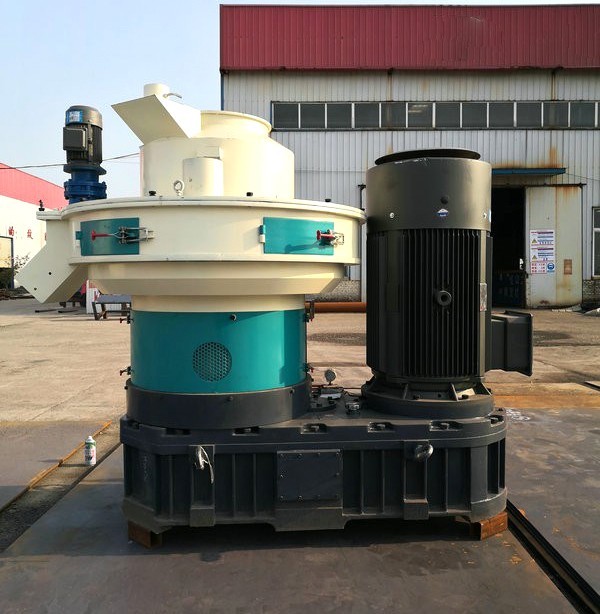
The CE2-12mm straw pellet machine is a device specifically designed to compress biomass materials such as crop straw into particles with a diameter of 12 millimeters. The following is a detailed introduction to the device:
This device is suitable for various biomass materials, such as corn stalks, rice stalks, cotton stalks, peanut shells, sawdust, etc. The moisture content of raw materials can be processed within a certain range (usually 5%~30%).
Electric heating function:Equipped with a fully automatic electric heating device, the dry humidity of the material can be adjusted as needed to solve the problem of blockage or non molding caused by excessive material humidity.
By utilizing the principle of bi-directional rotation of thrust bearings, the pressure angle is automatically adjusted to ensure that the material is not squeezed or trapped, and to guarantee the stability of the discharge molding.
The working principle of the CE2-12mm straw pellet machine is mainly to process materials into pellets through extrusion granulation. During operation, materials fall vertically from the feeding port onto the surface of the frame plate, and through the rotation of the frame plate, the materials are continuously and evenly distributed on the surface of the mold cavity. Under the rolling of the roller, the powdered material passes through the holes of the mold, forming a continuously elongated cylindrical solid body. This cylindrical solid body continues to elongate until it is cut by the cutting blades around the uniformly distributed mold, forming particles of a certain size. The particles scattered around the mold are concentrated at the discharge port by the feeding teeth, and the particles automatically fall under the action of gravity, completing the process of particle compression.
According to the quality of the raw materials, the compressed particles can also be used as animal feed, providing a high-quality source of feed for the livestock industry.
The price of CE2-12mm straw pellet machine varies depending on factors such as model, configuration, and brand. When selecting equipment, it is recommended to comprehensively consider factors such as production needs, types of raw materials, and budget, and choose equipment with high cost-effectiveness. At the same time, pay attention to choosing reputable manufacturers and brands to ensure the quality of equipment and after-sales service.
 Address:Zibo, Shandong
 WhatsApp:+8615805335335
 Wechat: +8615805335335
  E-mail:zs@sdsmachinery.com